- Welcome to Stranger Things.

Recent posts
#51
The Unification Church: Past & Present / Re: Defenders of The Faith: Cu...
Last post by Peter Daley - May 03, 2026, 10:11:17 PMApril 25: Networks of Legitimacy: CESNUR, Religious Freedom Advocacy, & The Blurring of Scholarship & Activism (Luigi Corvaglia)
QuoteThis configuration finds a particularly effective interpretative key in a historical precedent: the Hadden Memorandum. It was a confidential email written by Jeffrey Hadden, a professor at the University of Virginia, which became public against the author's will.
The memo revealed a network of meetings and strategies among well-known scholars of New Religious Movements (NRMs), lawyers, and representatives of NRMs, aimed at "neutralizing"—this is the term used—the critics of cults (anti-cultists), such as Margaret Singer and the American Family Foundation (AFF).
The three main proposals of the memo were:
1. Creation of a flow of secret funding from NRMs to an "independent" group, composed of the promoters of the meetings mentioned in Hadden's letter, to support research favorable to cults, circumventing transparency about the origin and purpose of the funds.
2. Creation of an American version of INFORM (UK). The Information Network Focus on Religious Movements (INFORM) is an apparently respectable body founded in London in 1988 by Eileen Barker. In the memorandum, Hadden wrote that Barker "has taken a very significant step to neutralize anti-cult movements in the United Kingdom." Hadden reveals here that this organization was, at least at the time of the letter, actually part of a global campaign against anti-cultists, and the author promotes the creation of a U.S. version with the same objectives.
3. Creation of a strategy to counter the "Project Recovery," that is, the set of services for former members of cults and their families of the American Family Foundation (AFF), through a public campaign and the production of a new academic research agenda aimed at delegitimizing the concept of brainwashing. ...
Some doubts about the reliability of Bitter Winter have been expressed by sources that have no connection with the Chinese government, which might benefit from discrediting the magazine. For example, by a Korean Protestant publication and by the website BZF, affiliated with China Source, a nonprofit Christian "ministry" based in the United States that aims precisely to reduce pressure from the CCP on Christian churches. These critics hypothesized a link between Bitter Winter and the Church of Almighty God. However, it should be noted that China Source later rectified its claim, stating that, following private conversations with Bitter Winter, it understood that the magazine has no connection with the Church of Almighty God. When asked by the author about the arguments that led it to change its mind, it did not respond.
Further doubts arise regarding the transparency of Bitter Winter's funding models—it publishes daily and in multiple languages—and the methods of gathering information in closed contexts such as China.
What is certain is that the dynamic described appears to configure a real supply chain: academic production - specialized media - political advocacy. The result is a closed circulation of discourse, in which the same content moves between closely connected nodes, reinforcing each other.
#52
The Unification Church: Past & Present / Re: The Moons In America & Ame...
Last post by Peter Daley - April 22, 2026, 12:56:19 PMAccording to former member Teddy Hose, the guilty party, Mr Kim, is a member of the UC, which makes sense as if there were no connection to the UC, UC members would not have been targeted for the scam, and the victims would not have "volunteered" with an external unrelated organization, at least not for an extended period of time. The website is unsurprisingly down, but on earlier versions saved on the Internet Archive, there are references to the UC. More links coming soon....
April 16: New Jersey Man Pleads Guilty to Scheme Designed to Obtain Fraudulent Visas to Bring Aliens to the U.S. for Unlawful Fundraising (US Departmemt of Justice)
April 16: New Jersey Man Pleads Guilty to Scheme Designed to Obtain Fraudulent Visas to Bring Aliens to the U.S. for Unlawful Fundraising (US Departmemt of Justice)
Quote"Mr. Kim not only orchestrated a years-long scheme built on visa fraud and deception, he also diverted more than a million dollars in illicit proceeds to his own bank accounts," stated Special Agent in Charge Jenifer L. Piovesan of the IRS Criminal Investigation (IRS-CI) Newark Field Office. "This case underscores IRS-CI's commitment to working with our law enforcement partners to uncover financial crimes that exploit vulnerable individuals and undermine the integrity of our tax system."
Kim and his co-conspirators recruited young members of the Family Federation for World Peace and Unification (Unification Church), founded by Sun Myung Moon in South Korea in 1954, from different countries to join ILTP. Kim directed the effort to get B-1/B-2 visas for ILTP members through the submission of false and misleading statements throughout the visa application process. Once the visas were approved, Kim coordinated the members' travel to the United States and purchased their airline tickets.
Members, who entered the country pursuant to nonimmigrant visas, could not lawfully work in the United States. However, Kim required members to travel throughout the country and "fundraise" for ILTP while living in a van with three or four other people. Kim and his co-conspirators set a daily fundraising goal for each member and required members to solicit donations for long hours each day. Members worked until they met their monetary goal during fundraising cycles that lasted several months. In return, members received only $100 per month to cover their expenses and about $25 per day to pay for meals.
#53
The Unification Church: Past & Present / Re: 2025/2026: Han Hak-ja's Ar...
Last post by Peter Daley - April 20, 2026, 11:51:42 AMApril 2026 Cont.
I was actually wondering about the "alleged" illegal gambling. I recall members posting a justification for it: raising money for charity. I'll have to see if I can find mention of that.
April 20: Special Counsel Raids Police Over UC Cover-Up (The Chosun Daily)
April 22: Special Counsel Secures Yoon Hee-geun's PC in Cover-up Probe (The Chosun Daily)
April 27: Ex-UC Official Gets Longer Prison Term During Appeal Over Gifts to Former First Lady (Korea JoongAng Daily)
A little late to protect Mother Han perhaps, and a leopard's spots are not so easily changed:
April 27: UC in South Korea Declares Political Neutrality, Bans Electioneering (Chosun Biz)
April 27: Ex-UC Official Gets Heavier Prison Term During Appeal Over Gifts to Ex-First Lady (The Korea Times)
April 28: Appeals Court Sentences Rep. Kweon to 2-Year Prison Term Over Funds From UC (Yonhap News)
I was actually wondering about the "alleged" illegal gambling. I recall members posting a justification for it: raising money for charity. I'll have to see if I can find mention of that.
April 20: Special Counsel Raids Police Over UC Cover-Up (The Chosun Daily)
QuoteThe comprehensive special counsel announced that they conducted raids on the National Police Agency, Gangwon Provincial Police Agency, and Chuncheon Police Station from the morning of that day. It was reported that the special counsel sent prosecutors and investigators to secure materials related to the suspicion of covering up the investigation into the Unification Church's overseas gambling case.
The suspicion of covering up the Unification Church investigation centers on the fact that the Chuncheon Police Station, despite obtaining intelligence in June 2022 that Unification Church leader Han Hak-ja and other executives gambled an amount worth 6 billion Korean won at a Las Vegas casino in the U.S. from 2008 to 2011, did not conduct an investigation. It was also confirmed that the Unification Church side, having prior knowledge of the related content, destroyed evidence and prepared for the investigation.
April 22: Special Counsel Secures Yoon Hee-geun's PC in Cover-up Probe (The Chosun Daily)
QuoteThe second comprehensive special counsel raided the National Police Agency and others on the 21st to verify whether former National Police Agency Commissioner General Yoon Hee-geun was involved in allegations of covering up the investigation into the Unification Church....
April 27: Ex-UC Official Gets Longer Prison Term During Appeal Over Gifts to Former First Lady (Korea JoongAng Daily)
QuoteThe appeals court found Yun guilty of giving a Graff diamond necklace worth 62.2 million won ($42,200) and a Chanel bag worth 12.7 million won to Kim, the wife of ousted former President Yoon Suk Yeol, in July 2022 while requesting favors on various issues related to the church.
It also ruled that he gave 100 million won in illegal political funds to Rep. Kweon Seong-dong of the now main opposition People Power Party — a close political ally of Yoon — in January 2022.
The court overturned the lower court's acquittal of Yun from charges of embezzling church funds to gift a separate Chanel bag to Kim in April 2022, finding him guilty of embezzlement, which apparently led to his increased sentence.
A little late to protect Mother Han perhaps, and a leopard's spots are not so easily changed:
April 27: UC in South Korea Declares Political Neutrality, Bans Electioneering (Chosun Biz)
QuoteIt also warned, "All legal responsibility arising from violations of the guidelines lies with the individual actor, and in the case of pastors and public officials, we state that they will be strictly disciplined without exception in accordance with internal regulations."
April 27: Ex-UC Official Gets Heavier Prison Term During Appeal Over Gifts to Ex-First Lady (The Korea Times)
April 28: Appeals Court Sentences Rep. Kweon to 2-Year Prison Term Over Funds From UC (Yonhap News)
QuoteThe Seoul High Court handed down the sentence after finding him guilty of accepting 100 million won (US$68,000) from a church official seeking favors from the former administration of President Yoon Suk Yeol.
#54
The Unification Church: Past & Present / Re: Defenders of The Faith: Cu...
Last post by Peter Daley - April 11, 2026, 08:16:34 AMApril 7, 2026: Religion & State Authority: What Happens When Religious Freedoms Clash With Child Safety? (ICSA Today)
QuoteA significant hurdle in prosecuting these cases is the tendency of some scholars and religious groups advocating to dismiss former members as "biased apostates." This classification often results in victim testimony being given less weight than the statements of group leaders. When reports of abuse are framed as attacks on religious freedom rather than human rights violations, the actual physical harm done to children is frequently downplayed or ignored.
#55
Stranger North Korean Things / Books About North Korea & Nort...
Last post by Peter Daley - April 07, 2026, 09:41:20 PMI decided to provide of lists of books about North Korea I have read and plan to read one day. In 2015, I embarked in something of a North Korea readathon!
Nov. 2013: Tears of Blood: A Korean POW's Fight for Freedom, Family, and Justice by Yoo Young-bok
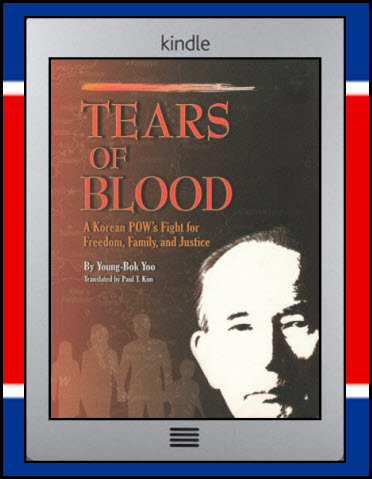
I had the pleasure of meeting Mr Yoo at a talk he gave at my university. Whenever I tell anyone his story, I have to fight back tears.
Reviews:
2013: Tears of Blood: A Korean POW's Fight for Freedom, Family, and Justice
Nov. 2013: Tears of Blood: A Korean POW's Fight for Freedom, Family, and Justice by Yoo Young-bok
I had the pleasure of meeting Mr Yoo at a talk he gave at my university. Whenever I tell anyone his story, I have to fight back tears.
Reviews:
2013: Tears of Blood: A Korean POW's Fight for Freedom, Family, and Justice
#56
Stranger North Korean Things / Life in the North Korea Army
Last post by Peter Daley - April 06, 2026, 08:29:52 AM"Ken" One of my former students was a North Korean soldier for 10 years - the length of North Koera's mandatory military service, and he certainly shared some fascinating anecdotes into that life. While reflecting on my time spent with him - and why the hell haven't I been better at keeping in touch? I decided to look for articles that explore facets of those ten years. He is interviewed in this article, as is my other long-term student before Covid, Sharon. I was there the days Sharon and Ken were interviewed to give some moral support. That was over 10 years ago? Wow.
May 20, 2015: North-Korean Refugee Forced Work Coal Reveals Journey (John Power for The Daily Mail)
I took a photo of the interview:
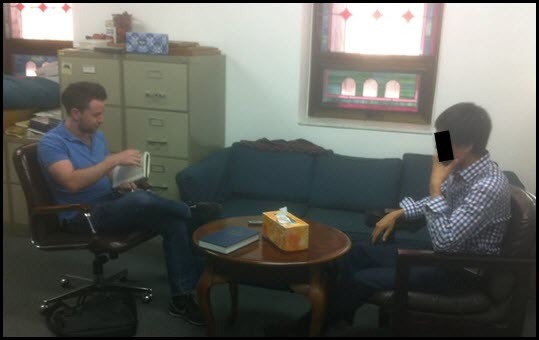
Ken was interviewed for this piece:
March 2, 2018: A North Korean's Unexpected Challenges in the South: Learning the Language & Ditching the Accent (CBC News)
April 12, 2024: Young North Koreans Are Taking Pains to Avoid Military Service (Daily NK)
More articles will of course be posted when I have the time and inclination....
May 20, 2015: North-Korean Refugee Forced Work Coal Reveals Journey (John Power for The Daily Mail)
QuoteThe famine in North Korea may be over, but poverty and hunger remains rife. More than a quarter of North Korean children are chronically malnourished, according to U.N. data, and the country's economy is roughly one fortieth the size of South Korea. And serving in the military was no guarantee of a meal at the end of the day.
One former soldier - another of the defectors who gather together in Seoul - describes being constantly hungry during his 10 years of military service, which finished in 2010. The man, who goes by 'Ken' and doesn't want his face shown out of fear for his safety, says his meals in the army often consisted of little more than a small cup of rice and pickled radish. ... Despite years in the military, the earlier defection of his mother and brother left him blacklisted from work. 'I was always rejected because my mother and brother were missing,' he said. 'I could not even get a job that had much lower requirements than my skills and qualifications.'
I took a photo of the interview:
Ken was interviewed for this piece:
March 2, 2018: A North Korean's Unexpected Challenges in the South: Learning the Language & Ditching the Accent (CBC News)
QuoteThrough his years in the military, Eom was loyal to the regime, even after watching fellow soldiers get crushed under steel beams during forced construction projects in Pyongyang.
April 12, 2024: Young North Koreans Are Taking Pains to Avoid Military Service (Daily NK)
More articles will of course be posted when I have the time and inclination....
#57
Stranger North Korean Things / Re: Beyond The Border: Life on...
Last post by Peter Daley - April 06, 2026, 07:58:28 AM2026
Jan. 22: North Korean Defections to South Korea Remain Low Years After COVID-19 Pandemic (Stars & Stripes)
QuoteThirteen fewer North Koreans defected across the southern border in 2025 than the year before for an annual tally of 223, according to recent data from South Korea's Ministry of Unification. Of those, 198 were women and 25 were men, a ministry spokeswoman told Stars and Stripes.
Still, the number of defectors making their way to South Korea the past three years is about one-fifth of those who defected prior to the COVID-19 pandemic, according to numbers the spokeswoman provided. The pandemic lasted from March 2020 to May 2023, according to the World Health Organization. Before the pandemic, more than 1,000 people defected from North Korea annually, according to the ministry's statistics. Since then, an average of 200 have made their way south each year, the spokeswoman said. ...
March 28: I Escaped North Korea With my Mum. Now I'm Terrified She Might Be Sent Back (BBC)
QuoteIn response to a question from the BBC, the foreign ministry in Beijing said China was a country "ruled by law". "Illegal immigrants are not refugees. China has always maintained a responsible attitude, adhering to domestic and international law, and handling these matters appropriately in the spirit of humanitarianism," the statement added.
April 29: For NK Defectors at South's Resettlement Center, Smartphones Offer True Taste of Freedom (Korea JoongAng Daily)
July 25: After 20 Years on the Move, A School for Children with North Korean Backgrounds Gets A Permanent Home (Korea JoongAng Daily)
#58
Stranger North Korean Things / Re: Beyond The Border: Life on...
Last post by Peter Daley - April 06, 2026, 07:58:19 AM2024
July 23: Children of North Korean Defectors Born in Third Countries Face Discrimination, Legal Blind Spots (Korea JoongAng Daily)
2025
The fact that I've neglected this thread for the past six years is a good a sign as any that I took a long and I think needed break from all of this - North Korea/South Korean cults etc. I also stopped volunteering with Teach North Korean Refugees, now called Freedom Speakers International, when Covid hit, and regretfully, I've yet to return to that although I keep in touch with some of my former students, one of whom has released a book which I will soon read. I was with Sharon the day this interview was conducted to offer some moral support. We're going to meet up soon, and I am so looking forward to catching up. Back to the topic with a video I just stumbled upon. And I hope one day soon to dig up and post articles published between Feb. 2020, the most recent article currently posted before this post, and today - March 31, 2026.
May 30: North Korean Defectors Struggle to Adapt to New Life in South Korea (France 24 English)
#59
Stranger North Korean Things / Re: Beyond The Border: Life on...
Last post by Peter Daley - April 06, 2026, 07:55:36 AM2019
Sept.: A Defector's Journey (State Magazine)
QuoteAccording to a 2017 survey conducted by the Korea Hana Foundation, which provides educational and other support to North Korean defectors, the majority of North Korean defectors are of middle- and high-school age. The Democratic People's Republic of Korea (DPRK) extols the virtues of its educational system, including boasting a literacy rate of 100 percent, but a 2017 "Foreign Policy News" report indicates that 16 percent of North Korean class time is dedicated to studying political thought, which includes the propaganda-heavy history of Chairman Kim Jong Un and his family. While not as blatant as political thought classes, other subjects, such as math and English, also incorporate praise for the DPRK leadership: sample sentences from English textbooks proclaim Kim Il Sung's generosity and Pyongyang's beauty. Moreover, students who escape North Korea must put their education on hold, sometimes for many years. To reach the South, most defectors flee through China, where they are considered illegal immigrants and are subject to repatriation. When students who have defected try to pick up where they left off in South Korea, many find that they are far behind their classmates.
English—present in many aspects of South Korean life, from mandatory language classes beginning in elementary school to increasingly common loanwords—is a major barrier to defectors, including students, looking to build a life in the South. In public schools, defector students, who may become the targets of bullying, already face significant challenges adjusting to their new lives and school environment. Data from the South Korean government highlight the effects of an interrupted education on North Korean defector students. The high school dropout rate for North Korean defector students in 2018 was 2.5 percent, significantly higher than the 2018 dropout rate of 0.9 percent for South Korean students overall. Prominent commentators and South Korean NGOs that work with defectors attribute this outcome to the difficulties many defectors experience in trying to keep up with South Korea's fast-paced curriculum while simultaneously dealing with the social challenges accompanying defection.
Sept. 2: ROK Government to Establish Comprehensive Measures to Guarantee Social Stability of North Korean Defectors (Ministry of Unification)
Sept. 21: She Fled NK for a Better Life - She Died With Her Young Son in Seoul (CNN)
QuoteWhen defectors reach South Korea, they are given 8 million won ($6,704) cash. Two-person households also get unconditional welfare support of 870,000 won ($729) per month for six months, less than the country's average median income for a two-person household, which is 2.9 million won ($2,430).
Still, many defectors – like Han – struggle to find employment. A survey last year by South Korea's Unification Ministry of more than 25,000 defectors found their rate of unemployment is 2.9% higher than South Koreans. Almost 60% of those surveyed said that childcare obstructed their ability to gain employment.
Dec. 2: NK Defectors Caught in Vietnam Face Risk of Deportation (The Korea Herald)
2020
Jan. 29: North Korean Would-Be Defectors Arrested in Emergency Operation Near China Border (Radio Free Asia)
Jan. 30: Seven Out of Fifteen North Korean Would-Be Defectors Arrested in Emergency Operation (The Union Journal)
Feb. 17: Former North Korean Diplomat's Smartphone Hacked Presumably by North Korean Group (The Korea Times)
2021
Jan. 27: Number of North Korean Defectors Drops to Lowest Level in Two Decades (CSIS)
2023
July 20: Beijing 'Actively Enables' Trafficking of North Korean women, Girls (The Korea Times)
Aug. 6: Why Are Over 70% of North Korean Defectors Female? (The Korea Times)
#60
Stranger North Korean Things / Re: Beyond The Border: Life on...
Last post by Peter Daley - April 06, 2026, 07:55:25 AM2018
Jan. 2: Only One NK Defector Settled in US Last Year - Lowest Since 2006 (The Korea Times)
Feb. 18: Defector Arrested for Sending Rice to Pyongyang (Yonhap News)
Feb. 22: Two Decades After Being Sold as Bride, NK Woman Finds Salvation in Seoul (NBC News)
March 2: A North Korean's Unexpected Challenges in the South: Learning the Language & Ditching the Accent (CBC News)
QuoteHis Northern inflection struck his co-Koreans as foreign, a telltale sign that also led to problems in the South. "I could understand maybe 70 per cent" of the Korean conversations on the streets of Seoul, Eom, 37, said recently in an interview at an English school in the South Korean capital. "But on the different side, the South Koreans couldn't understand me! They couldn't understand our language."
Aug. 2: North Korean Women have Been Escaping to the South... But What Happens When Hope Leads to Disappointment? (Ann Babe for California Sunday Magazine)
Aug. 5: I Have Arrived in South Korea. Now What? (2) (The Korea Times)
Nov. 1: Lack of Women & Girls in China has Helped Create a Thriving Market For Trafficked Girls & Young Women from Neighbouring Countries (Thomson Reuters Foundation)